
Digital vs. Analog Night Vision: What You Need to Know in 2026
Choosing between digital and analog night vision can be confusing. We break down the key differences so you can make an informed decision.
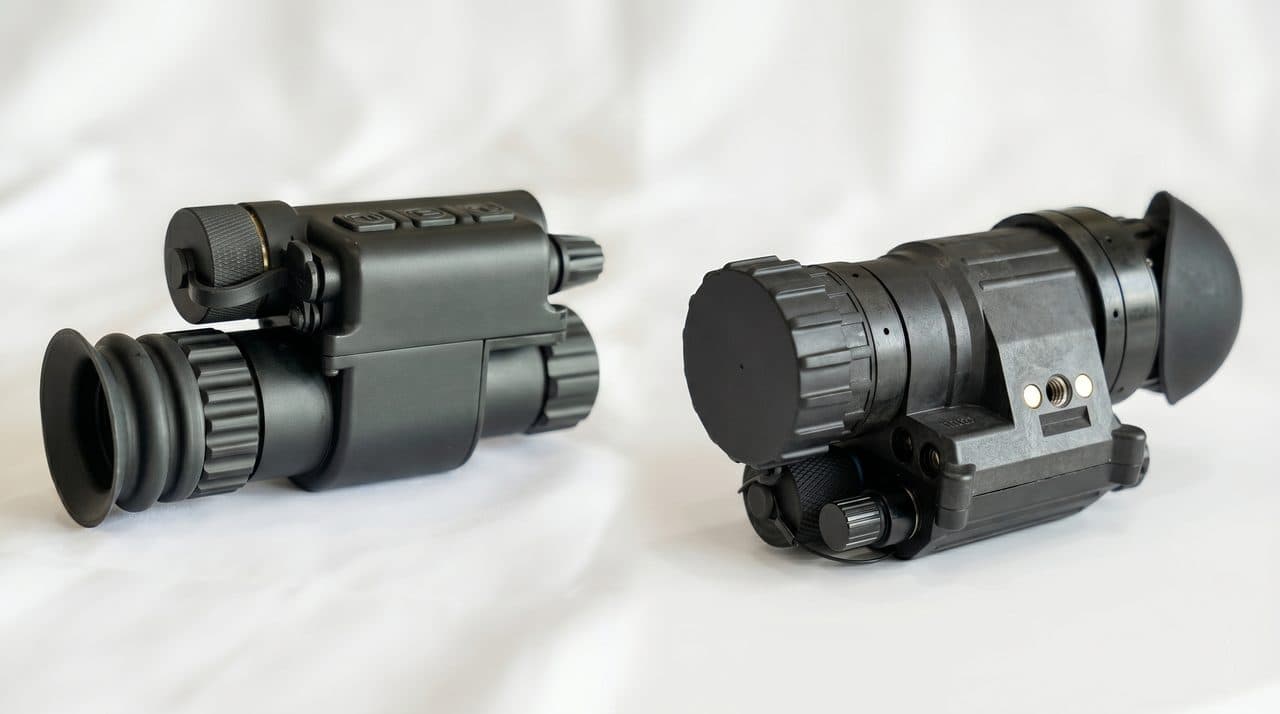
Night vision technology has evolved dramatically over the past decade. While traditional analog (image-intensifier) systems have been the gold standard for decades, modern digital night vision has closed the gap — and in many cases surpassed it. Here's what you need to know.
How Analog Night Vision Works
Analog night vision amplifies existing ambient light (moonlight, starlight) through a vacuum tube called an image intensifier tube (IIT). Photons hit a photocathode, electrons are multiplied across a microchannel plate, and the result is projected onto a phosphor screen — producing the characteristic green glow.
- Pros: Proven technology, excellent resolution, no digital lag
- Cons: Fragile (bright light exposure can permanently damage the tube), expensive to repair, no recording capability, restricted by ITAR export laws
How Digital Night Vision Works
Digital night vision uses a CMOS or CCD sensor to capture available light, processes it digitally, and displays it on a screen. No physical tube is involved — the signal path is entirely electronic.
- Pros: Safe in daylight, supports video recording and Wi-Fi streaming, repairable with standard electronics, no export restrictions
- Cons: Historically higher latency and lower sensitivity than Gen 3 analog — but this gap is rapidly narrowing
2026: The Gap Has Narrowed
Modern digital systems like the ASTRA-X10 operate at 100 fps with sensitivity approaching Gen 2 analog performance. For most practical applications — hunting, wildlife observation, search and rescue — the difference is negligible.
"The question is no longer digital or analog — it's which digital system fits your use case and budget."
Cost Comparison
| Category | Digital | Analog Gen 2 | Analog Gen 3 |
|---|---|---|---|
| Entry price | $500–$1,200 | $1,500–$3,000 | $3,000–$10,000+ |
| Repair cost | Low | High | Very high |
| Bright-light safe | Yes | No | No |
| Built-in recording | Yes | No | No |
Bottom Line
For operators requiring absolute top-tier performance in the most demanding tactical environments, Gen 3 analog is still the benchmark. For everyone else — hunters, outdoor enthusiasts, wildlife researchers, and budget-conscious professionals — a quality digital system delivers exceptional value.